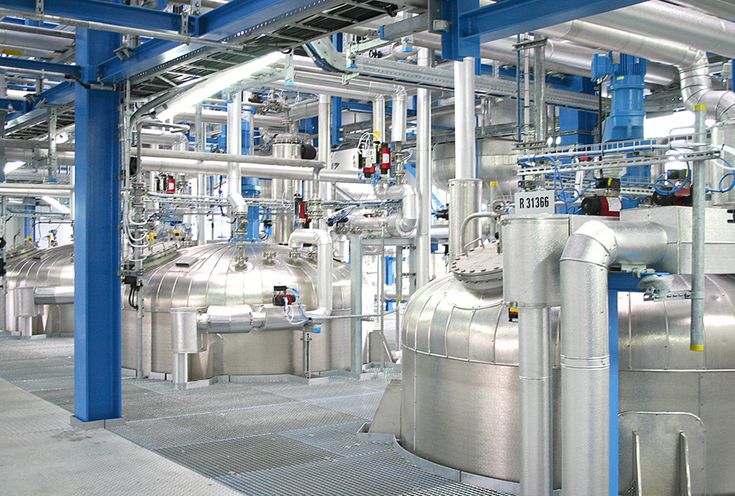
Chemical Manufacturing

Reliable Filtration Solutions for the Chemical Processing Industry

Chemical manufacturing processes demand precise contamination control, high chemical compatibility, and reliable filtration systems to ensure product quality, equipment protection, and uninterrupted production. Trinity Filtration Technologies provides advanced filtration solutions engineered to handle aggressive chemicals, corrosive fluids, solvents, acids, alkalis, and specialty process liquids across various chemical manufacturing operations.

Our filtration systems are designed to improve process efficiency, extend equipment life, reduce maintenance costs, and maintain stringent quality standards in modern chemical plants.

Challenges in Chemical Manufacturing

Chemical processing environments face several filtration challenges, including:

  • Removal of suspended solids and particulate contaminants
  • Filtration of corrosive chemicals and aggressive solvents
  • Catalyst recovery and product purification
  • Protection of pumps, valves, heat exchangers, and reactors
  • Process fluid clarification
  • Contamination control during batch processing
  • Reduction of equipment downtime
  • Compliance with quality and environmental standards

Strategic Separation Solutions for Key Chemical Processes

Trinity provides high-efficiency filtration nodes at every high-stakes phase of chemical processing:

1. High-Value Catalyst Recovery

Precious metal catalysts (such as platinum, palladium, and nickel) are foundational to synthetic chemical pathways but represent massive capital expenditures. Losing even trace amounts of these metals down-stream significantly hurts plant profitability.

Our absolute-rated depth filter cartridges and specialized resin-bonded elements provide high-efficiency containment matrices. They pull fine catalytic particles cleanly out of post-reactor slurries, maximizing recovery margins without blinding the filter media.

2. Purification of Volatile Solvents & Monomers

Achieving electronic, polymer, or reagent-grade purity profiles requires removing microscopic gels, colloidal particles, and pipe scale from liquid feeds.

We manufacture thermally bonded bicomponent polypropylene and polyester filter cartridges. Because these elements are bonded fiber-to-fiber without using chemical surfactants or binders, they offer outstanding chemical compatibility and will not leach extractables into pure solvent matrices.

3. Safe Handling of Aggressive Acids & Brines

Processing strong mineral acids (HCl, H₂SO₄) or highly corrosive brines quickly erodes standard metals, leading to fluid bypass and structural leaks.

Trinity fabricates robust Filter Housings lined with rubber or specialized GRP (Glass Reinforced Plastic), as well as exotic metallurgies like Hastelloy, Monel, and Duplex Stainless Steel. These systems provide absolute seal integrity and long-term corrosion resistance in extreme pH ranges.

Heavy-Duty Construction Tailored for Processing Plants

[Corrosive Raw Feed] ──> [Exotic Alloy/GRP Corrosion Barrier] ──> [Zero-Leak Purified Effluent]

Our process filtration assets include:

  • ASME and CE Code Certified Vessels: Engineered with heavy-duty swing-bolt closures for rapid element changes, rated for extreme temperature cycles and high operating pressures.

  • Flow-PURE™ Fully Welded Bag Filters: Utilizing advanced polypropylene and polyester felt with welded plastic “V” collars. The direct thermal weld eliminates needle holes, completely preventing fluid channeling or medium migration into the chemical stream.

  • High-Volume Fabricated Pipe Strainers: Built as primary protective barriers on bulk liquid intake manifolds to screen out debris before it scores high-pressure processing pumps.

Process ChallengeTrinity Technical InterventionPlant-Level Outcome
Media Leaching/ExtractablesBicomponent thermally bonded cartridges (binder-free).Contaminant-free batches with zero chemical outgassing.
Aggressive Corrosive ErosionHastelloy, Monel, & Rubber/GRP-lined housings.Extended equipment life cycle and eliminated hazard leaks.
High Viscosity PolymersHigh-surface-area pleated or resin-bonded depth filters.Lower differential pressure ($DP$) and higher volumetric throughput.

Frequently Asked Questions (FAQs) | Chemical Manufacturing

01.What makes Trinity's bag filters safer for chemical lines than conventional sewn bags?

Conventional liquid bag filters use stitched seams, which leaves thousands of tiny needle holes along the length of the bag. Under intense process pressures or high-viscosity chemical flows, fluids escape through these needle holes—a defect known as fluid channeling or bypass. Trinity’s Flow-PURE™ Series Bag Filters feature fully welded seams and a thermally fused plastic “V” collar. This creates a solid, uniform barrier that completely eliminates bypass, guaranteeing that 100% of the chemical feed passes directly through the rated filtration media.

To prevent chemical erosion, Trinity designs and fabricates industrial filter housings using a diverse matrix of corrosion-resistant materials. Depending on your chemical compatibility chart, process temperatures, and pressure requirements, we provide:

  • Exotic Alloys: Duplex Stainless Steel, Super Duplex, Monel, and Hastelloy.

  • Engineered Linings: Heavy-duty rubber lining, GRP (Glass Reinforced Plastic), and custom fluoropolymer coatings inside carbon steel or standard stainless steel vessels.

High-viscosity process fluids require high differential pressures (Delta P) to force the fluid through the filter media. Standard melt-blown cartridges often compress under this pressure, which pinches the pores shut, spikes the $DP$, and reduces filter life. Trinity’s Resin-Bonded and Bicomponent Thermally Bonded Cartridges utilize an extremely rigid, self-supporting fiber-to-fiber matrix. This structural integrity prevents the pore structure from compressing or shifting, allowing the element to hold a stable micron rating and absorb heavy particulate loading right up to its terminal replacement threshold.

Yes. Safety is paramount in chemical plants. All Trinity industrial filter housings are engineered, simulated, and fabricated in compliance with international design codes, primarily ASME Section VIII Division 1 and CE/PED guidelines. We offer optional certified code-stamping, non-destructive testing (NDT) documentation, radiography, and hydro-testing verification to ensure complete safety compliance on your facility floor.

Absolutely. We construct multi-stage, skid-mounted systems tailored for this exact process logic. Coarser contaminants and large scales are caught early using our cleanable Fabricated Basket Strainers or high-capacity bag filters. The final polishing phase uses our absolute-rated Polypropylene or Polyethersulfone (PES) membrane filter cartridges to strip out sub-micron particulates and micro-gels, ensuring your final solvent meets strict chemical purity grades.

We are always ready to help you and answer your questions

Chemical Manufacturing

Our Services

Have a
project in
mind?